Description
Custom Fabricated I-Beam Height Restrictor Barriers
Stop Oversized Trucks Before They Cause Expensive Damage
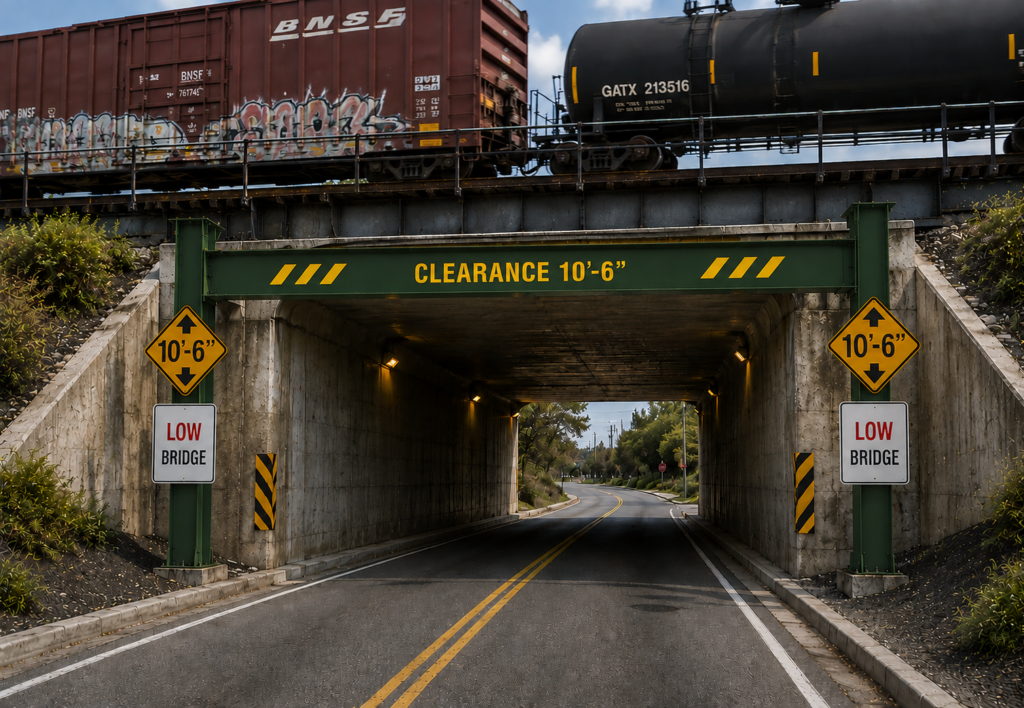
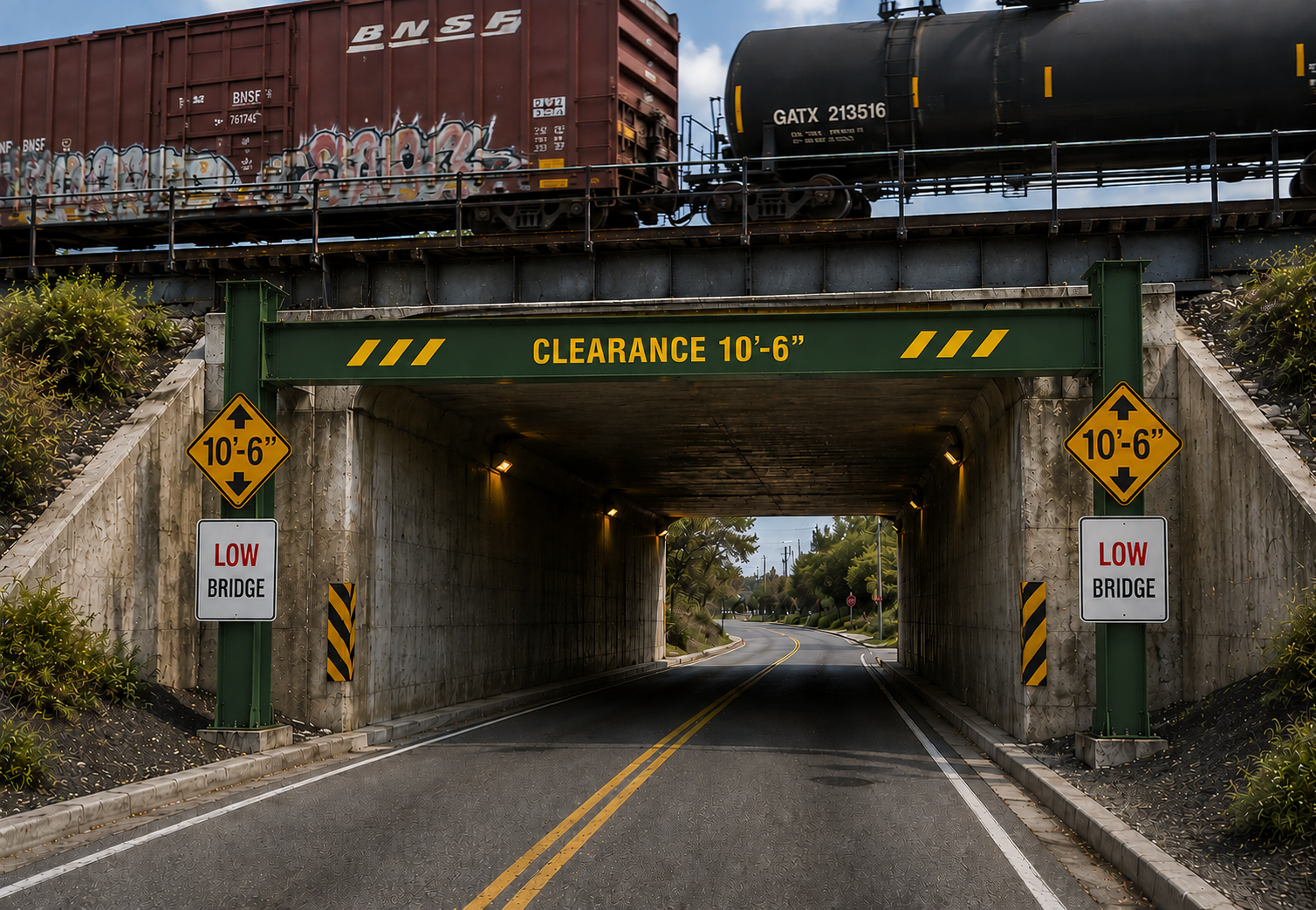
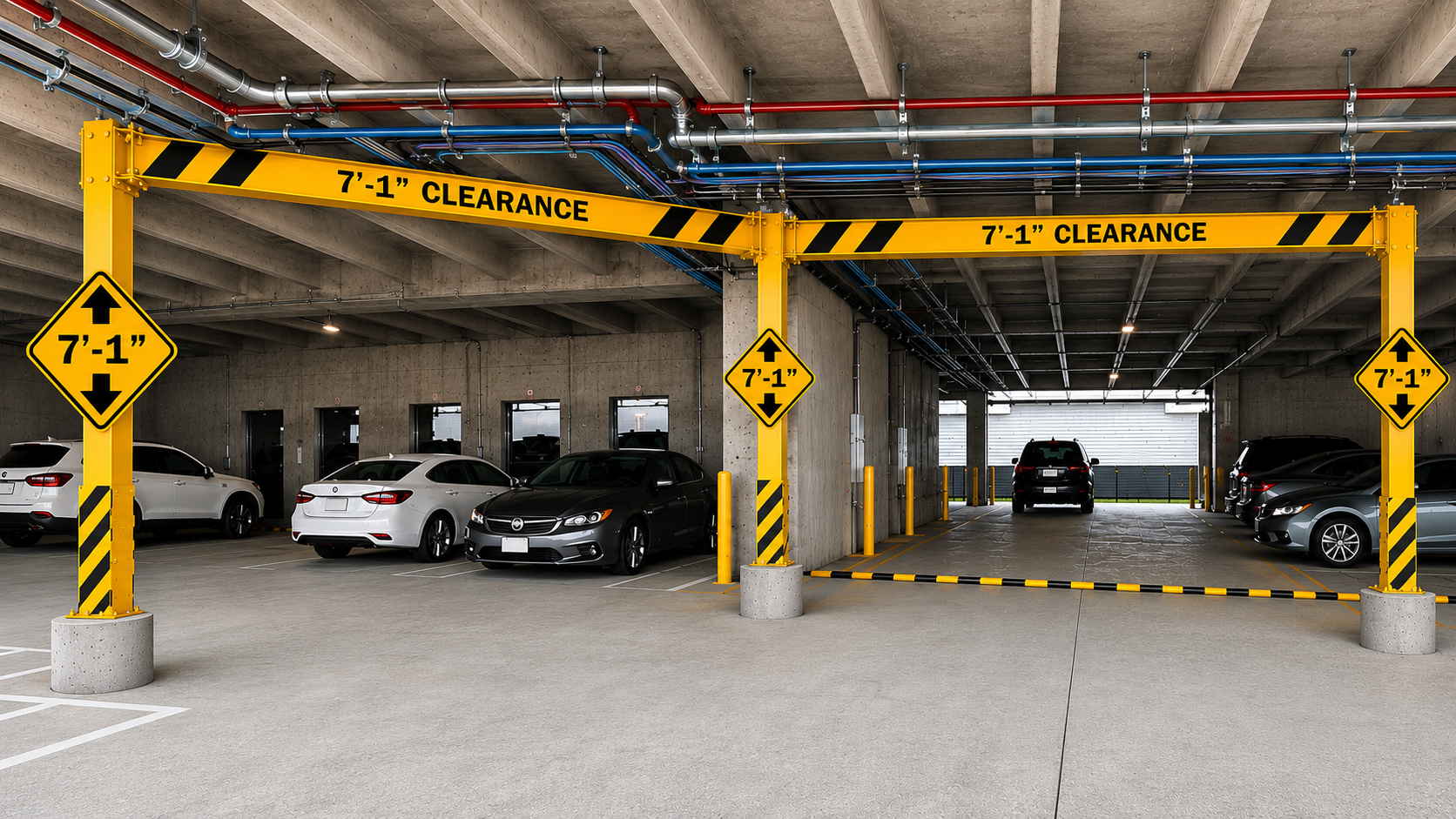
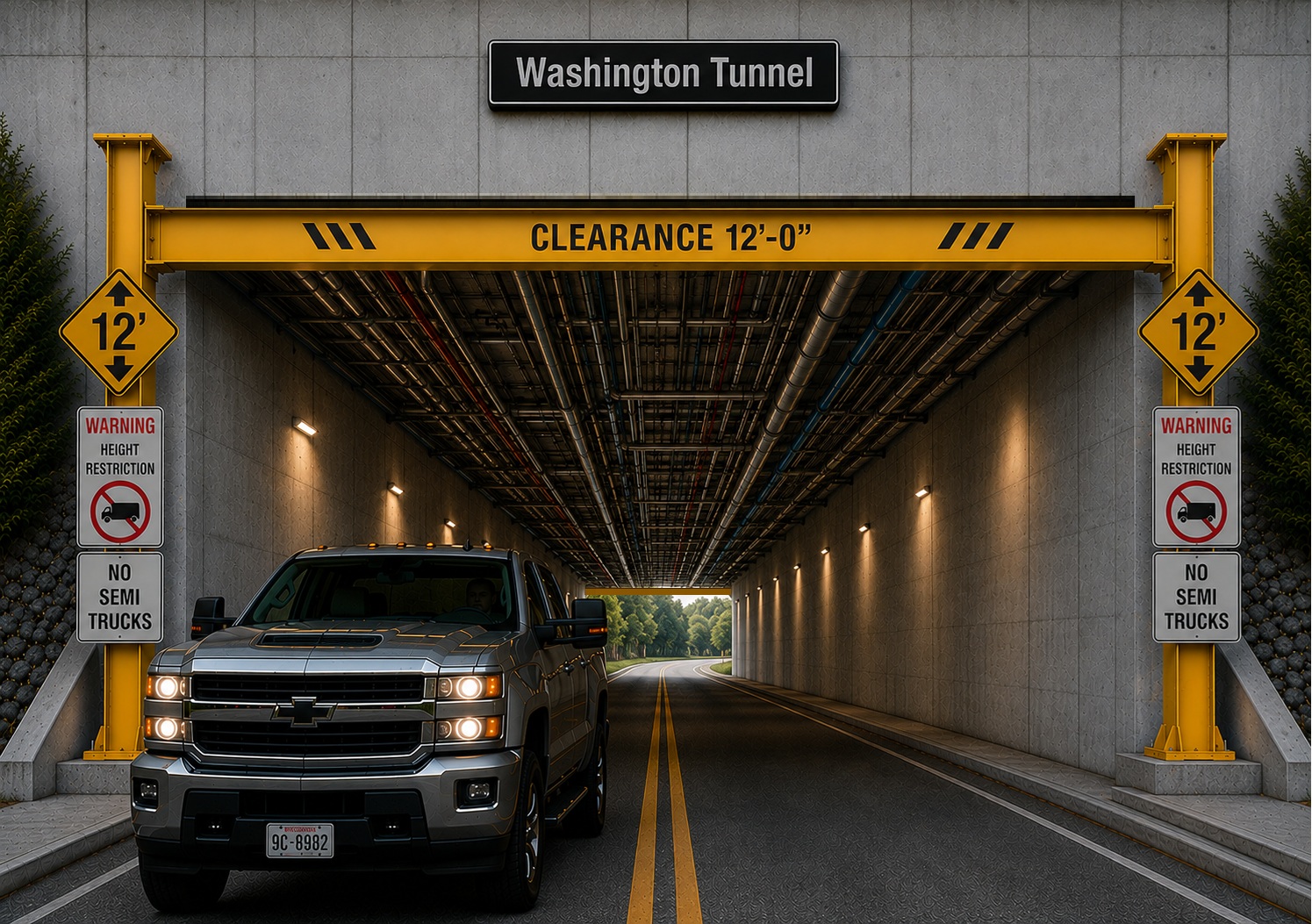
Protect parking garages, tunnels, loading areas, covered driveways, utility corridors, and other structures from oversized vehicles with a custom-fabricated steel height restrictor system from BarrierStop.
Our heavy-duty height restriction barriers are fabricated from structural steel I-beams and designed around the specific dimensions and conditions of your facility. Unlike lightweight hanging clearance bars that may provide little more than a warning, these substantial steel systems create a highly visible, clearly defined height restriction before a vehicle reaches vulnerable overhead equipment or structures.
One truck entering where it shouldn’t can cause hundreds of thousands of dollars in damage. Stop it before it gets there.
Protect Critical Overhead Infrastructure
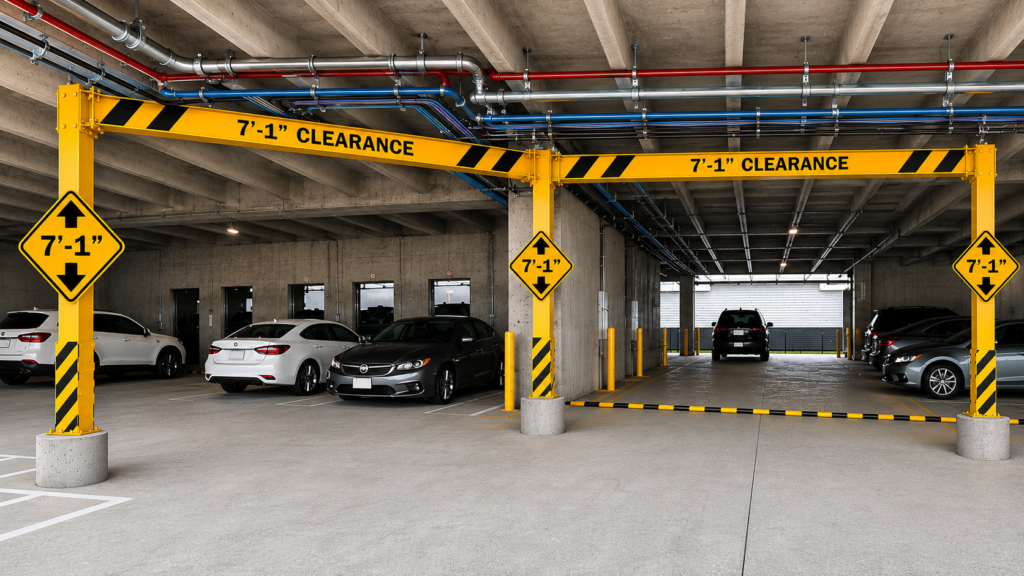
Low-clearance areas can contain far more than concrete and structural steel. A single oversized truck can strike fire protection systems, plumbing, electrical conduit, HVAC equipment, communications infrastructure, or other critical building systems.
BarrierStop height restrictors can help protect:
- Fire sprinkler mains and sprinkler systems
- Water and utility piping
- Electrical conduit and equipment
- Fiber-optic, communications and data cabling
- HVAC ductwork
- Structural beams and ceilings
- Parking garage entrances
- Tunnel infrastructure
- Loading docks and service entrances
- Covered driveways and passageways
Built for Your Facility — Not Pulled Off a Shelf
Every location is different. BarrierStop can design and fabricate a height restrictor around the required clear opening, available mounting locations, vehicle traffic pattern and desired clearance height.
Systems can incorporate structural steel I-beam crossarms, heavy-duty steel uprights, reinforced side braces, wall-mounted supports, base plates, anchor assemblies and custom warning signage.
Need a 15-foot opening? 24 feet? 40 feet? Need to keep the roadway completely clear of intermediate posts? Need the structure positioned against existing walls or designed around doors, loading areas or utilities?
We build the barrier to fit the site.
Highly Visible Warning System
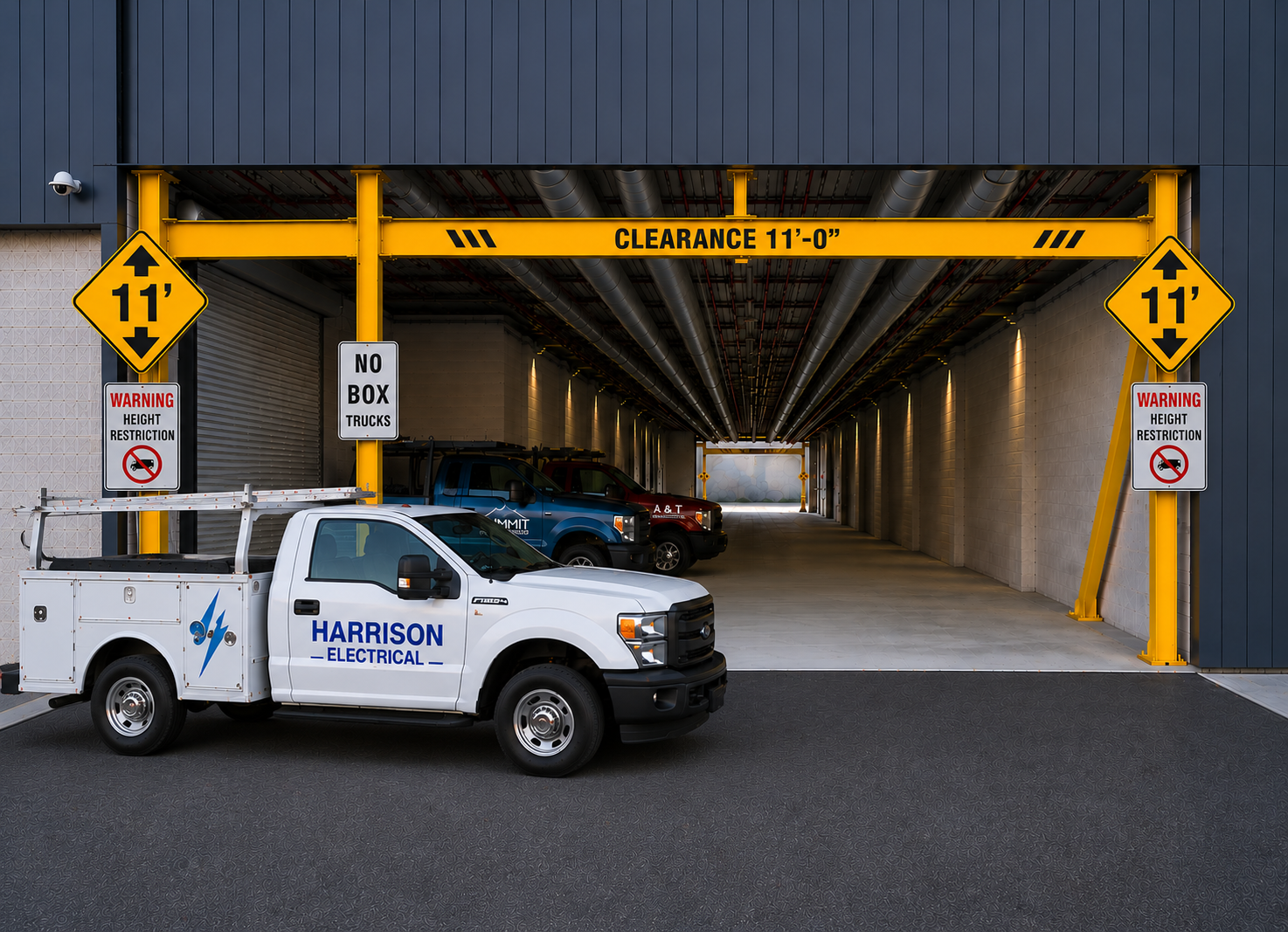
A height restrictor should give drivers every opportunity to recognize the restriction before impact. Systems can be finished in high-visibility safety yellow and equipped with oversized reflective clearance signage, warning signs, contrasting hazard markings and facility-specific messages such as:
11′-0″ CLEARANCE
WARNING — HEIGHT RESTRICTION
NO BOX TRUCKS
OVERSIZED VEHICLES PROHIBITED
Custom wording and signage configurations are available.
Applications
BarrierStop custom steel height restrictors are ideal for parking structures, underground garages, vehicle tunnels, commercial buildings, government facilities, hospitals, universities, industrial plants, distribution facilities, apartment and condominium garages, loading areas and other locations where oversized vehicles could damage overhead infrastructure.
Protect the Building — Not Just the Entrance
The objective is simple: make the height restrictor the first thing an oversized vehicle encounters—not your sprinkler system, water main, electrical infrastructure or building.
BarrierStop can work from photographs, drawings and field dimensions to develop a height restrictor configuration specifically for your facility.
Need a Custom Height Restrictor?
Send us your opening width, required clearance height, photographs and basic site dimensions. Our team can help develop a custom-fabricated steel solution for your application.
BarrierStop.com — Heavy-Duty Vehicle Barriers Built for the Real World.
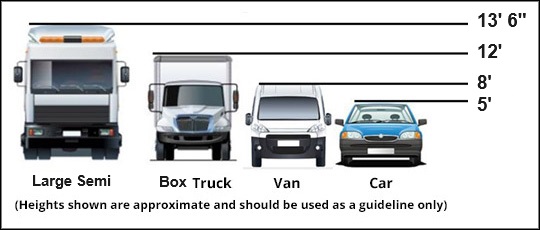
Vehicle Height Guide
I-BEAM Headache Bar
STOP THE TRUCK BEFORE THE TRUCK HITS YOUR BUILDING
Over-height and unauthorized commercial vehicles cause enormous damage to buildings and infrastructure every year. A driver ignores a clearance sign, follows GPS into the wrong entrance, takes a shortcut through a parking lot, or simply fails to recognize that the vehicle is too tall—and seconds later the property owner is dealing with damaged structures, broken fire sprinkler lines, severed communications, destroyed pavement, or a facility shutdown.
Signs warn drivers. A heavy-duty I-beam height restrictor physically establishes the limit.
Barrier Stop custom fabricates structural steel I-beam height restrictors to create a highly visible, extremely durable first line of defense before an oversized vehicle reaches the asset you are trying to protect.
ONE TRUCK. ONE MISTAKE. A VERY EXPENSIVE PROBLEM.
The damage from an over-height vehicle can extend far beyond a dented canopy. A truck striking overhead infrastructure can damage fire suppression mains, electrical conduit, fiber-optic and data cables, HVAC equipment, gas piping, structural members, lighting, signage, ventilation equipment and other critical systems.
In tunnels, parking structures, industrial facilities and utility areas, a single impact can affect multiple systems at once. The physical repairs may only be the beginning. Emergency response, engineering inspections, water damage, environmental cleanup, traffic control, business interruption and facility downtime can quickly multiply the cost of the original accident.
The purpose of a height restrictor is simple: put a strong, unmistakable barrier in front of the expensive infrastructure.
IT’S NOT JUST ABOUT HEIGHT
Commercial trucks also cause substantial damage simply by entering areas that were never designed to accommodate them.
A tractor-trailer cutting through a passenger-vehicle parking lot can damage asphalt, curbs, islands, landscaping, drainage structures, light-pole foundations and underground utilities. Heavy vehicles repeatedly making tight turns can rut pavement and tear apart asphalt surfaces—especially during hot weather.
An I-beam barrier can therefore be used not only to protect overhead clearance, but also to establish a physical vehicle-size restriction at entrances where commercial trucks simply do not belong.
If a sign saying “NO TRUCKS” isn’t enough, steel makes the message considerably harder to ignore.
WHAT CAN AN I-BEAM HEIGHT RESTRICTOR PROTECT?
The applications are almost endless. We custom fabricate systems for locations where the cost of allowing the wrong vehicle into a restricted area can greatly exceed the cost of preventing it.
- Parking garages and parking structures
- Asphalt parking lots
- Employee parking lots
- Retail parking areas
- Tunnels and underpasses
- Low-clearance bridges
- Building breezeways
- Covered driveways
- Porte-cochères
- Hotel entrances
- Hospital entrances
- Emergency department canopies
- Airport service areas
- Rental-car facilities
- Parking lot entrances
- Data centers
- Fiber-optic infrastructure
- Telecommunications facilities
- Electrical substations
- Utility plants
- Water treatment facilities
- Wastewater treatment facilities
- Fire sprinkler mains
- Overhead water lines
- Gas piping
- Electrical conduit
- Cable trays
- Data and communication lines
- HVAC ductwork
- Ventilation systems
- Mechanical equipment
- Loading docks
- Warehouse entrances
- Distribution centers
- Manufacturing plants
- Maintenance facilities
- Fleet yards
- Equipment yards
- Service bays
- Car washes
- Drive-through lanes
- Fueling facilities
- Gas station canopies
- EV charging areas
- Solar-panel parking canopies
- Dumpster enclosures
- Covered loading areas
- Pedestrian breezeways
- Campus roadways
- Schools and universities
- Stadiums and arenas
- Convention centers
- Government facilities
- Military installations
- Correctional facilities
- Transit facilities
- Rail facilities
- Airport roadways
- Restricted-access roads
- Private communities
- Churches and campuses
- Historic structures
- Architectural overhangs
- Building entrances
- Underground parking ramps
WHY I-BEAM?
There are many ways to warn a driver about restricted clearance: signs, hanging chains, suspended bars, PVC tubes and lightweight warning arms all have their place.
But some properties need something considerably more substantial.
A fabricated steel I-beam height restrictor creates a permanent physical boundary between oversized vehicles and valuable infrastructure.
For high-risk locations, that distinction matters. The barrier is positioned before the protected structure so that an over-height vehicle encounters the restriction before it reaches the building, tunnel, piping, canopy or equipment beyond it.
The objective is not to make the barrier invisible or forgiving. It is to make the clearance restriction obvious, substantial and extremely difficult for a driver to disregard.
SACRIFICE THE TRUCK—NOT THE INFRASTRUCTURE
Customers sometimes ask an understandable question:
“What happens if a truck drives into the barrier?”
That is precisely why the barrier is there.
A properly designed installation combines conspicuous clearance markings, warning signs and a physical height restriction. Drivers are warned before entering the protected area.
If a driver nevertheless attempts to take an over-height vehicle through the opening, damage to that vehicle may occur.
From the property owner’s perspective, the alternative can be dramatically worse: the same vehicle continuing into the facility and striking a fire suppression system, structural beam, utility line, tunnel ceiling, data network or other critical infrastructure.
A damaged truck can be repaired. A catastrophic infrastructure strike can shut down an entire facility.
“BUT WHAT ABOUT LIABILITY?”
Liability depends on the particular property, jurisdiction, design, signage and circumstances, so no manufacturer should promise that installing a barrier eliminates liability.
What a properly planned height-restriction system can do is provide drivers with a clear physical and visual indication of the maximum permitted vehicle height before they reach the protected asset.
That is why we recommend conspicuous clearance markings and appropriate warning signage as part of the overall installation.
When a commercial driver disregards a clearly marked clearance restriction, the resulting question should not simply be, “Why was there a barrier there?”
An equally important question is:
“What would that vehicle have hit if the barrier had not stopped it?”
That could be a $10,000 repair—or a six- or seven-figure infrastructure loss involving structural damage, utilities, fire protection, communications and business interruption.
WE GET THESE CALLS ALL THE TIME
Contractors, facility managers and property owners contact Barrier Stop because they are tired of repairing the same damage.
A truck has hit the overhang again.
A delivery driver entered the employee parking lot.
A semi used the property as a shortcut.
Someone tore down the sprinkler piping.
A box truck struck the garage ceiling.
A commercial vehicle destroyed another canopy.
A truck ignored the tunnel clearance signs.
The asphalt has been repaired twice and trucks keep coming back.
At some point, another sign isn’t the answer.
That’s when customers call us and ask for steel.
PROTECT THE CHEAPEST THING FIRST
There is a basic principle behind every Barrier Stop height restrictor:
Put the replaceable barrier in front of the irreplaceable—or extremely expensive—asset.
A fabricated steel barrier can be repaired or replaced. Structural concrete, fire mains, fiber-optic networks, mechanical systems, architectural structures and critical infrastructure may be vastly more difficult and expensive to restore.
Your height restrictor becomes the property’s first point of contact, rather than allowing the building itself to serve that purpose.
CUSTOM BUILT FOR THE PROPERTY YOU NEED TO PROTECT
There is no universal opening width or clearance height.
Barrier Stop can fabricate I-beam height restrictors around the actual requirements of the property, including custom clear heights, wide openings, multiple lanes, unusual mounting conditions and site-specific configurations.
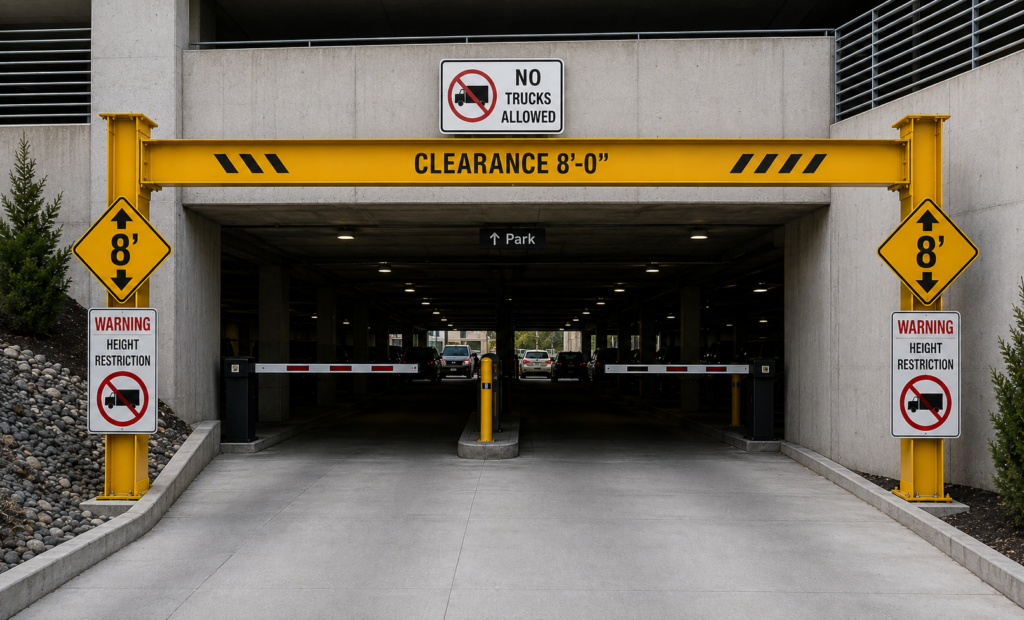
Systems can incorporate oversized clearance markings, reflective graphics, warning signage, NO TRUCKS / NO SEMI TRUCKS signage, directional information and other highly visible warnings.
Whether you’re trying to keep a box truck out of an 8-foot parking garage or prevent a 13′-6″ tractor-trailer from entering a 12-foot tunnel, the principle remains the same:
WARN THEM FIRST. STOP THEM BEFORE THEY REACH WHAT YOU’RE PROTECTING.